Choosing between bespoke joinery and ready-made furniture can feel simple at first. Both options can furnish a room, add storage and improve how a space looks. However, the differences become more important once you consider fit, quality, cost and long-term use.
Ready-made furniture may suit a standard room and a tighter budget. Yet awkward corners, alcoves, sloping ceilings and specific storage needs can quickly expose its limits. Poor sizing can waste space, while standard designs may not work with the layout of the property.
Your choice can affect how well the furniture fits, how much storage you gain and how the finished room feels. Cost, materials, flexibility and durability also matter, especially when you want furniture to work with the space rather than simply sit inside it.
What Is Bespoke Joinery?
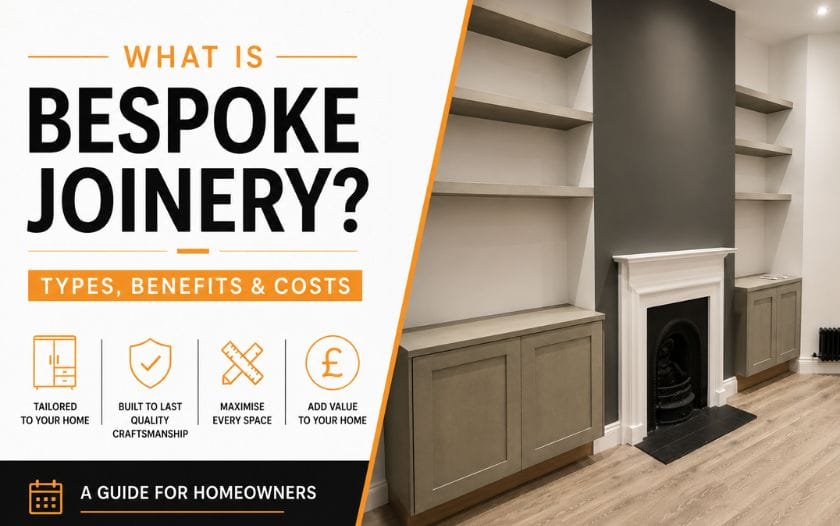
Bespoke joinery is furniture or timber work made to fit a specific space, layout and set of requirements. A joiner measures the area, plans the design and creates each piece around the dimensions of the room rather than using a standard size.
It can include fitted wardrobes, alcove units, shelving, cabinets, media units and other built-in storage. The main difference is the level of customisation, as you can choose the size, materials, finish and internal layout to suit how you want to use the space.
What Is Ready-Made Furniture?
Ready-made furniture is produced in standard sizes and designs before a customer chooses it. Manufacturers usually make these pieces in larger quantities, which makes them quicker to buy and easier to replace than custom-made options.
It can include wardrobes, cabinets, shelving, tables, storage units and other freestanding furniture. The main limitation is flexibility, as you usually need to work around fixed dimensions, materials and finishes rather than adapting the furniture to the exact shape of the room.
Bespoke Joinery vs Ready-Made Furniture: Key Differences
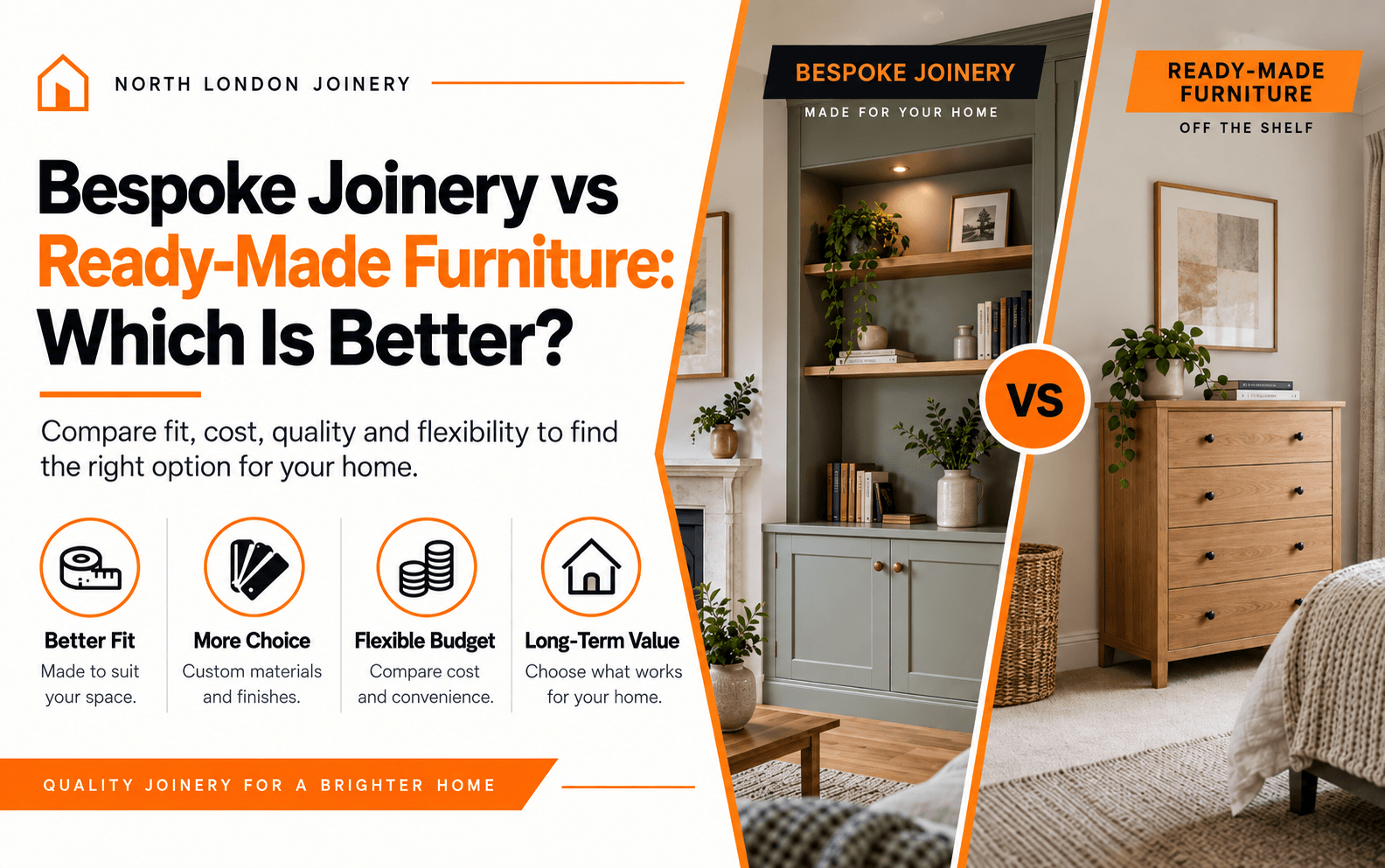
Bespoke joinery is made specifically for the size, layout and style of your room, while ready-made furniture is produced in standard dimensions and fixed designs. This gives bespoke joinery more flexibility in fit, materials and finish, whereas ready-made furniture focuses more on convenience and lower upfront cost.
| Factor | Bespoke Joinery | Ready-Made Furniture |
| Fit | Made to suit the exact dimensions of the room | Available in standard sizes |
| Design | Tailored to the layout, style and intended use | Limited to pre-designed options |
| Customisation | Offers control over dimensions, materials, finishes and storage layout | Allows little or no structural customisation |
| Use of Space | Can make better use of alcoves, corners and awkward areas | May leave unused gaps in irregular spaces |
| Materials | Gives more choice over timber, boards, hardware and finishes | Uses materials selected by the manufacturer |
| Quality | Can offer a higher level of craftsmanship and detailing | Quality varies between brands and price ranges |
| Cost | Usually costs more because of design, labour and installation | Usually has a lower upfront cost |
| Lead Time | Requires time for measuring, design, manufacture and fitting | Often available immediately or within a short delivery period |
| Installation | Usually fitted on site as part of the project | Often delivered assembled or flat-packed |
| Lifespan | Can provide strong long-term value when built and maintained well | Lifespan depends heavily on materials and construction quality |
What Are the Advantages of Bespoke Joinery?
Bespoke joinery offers more control over how furniture works within a room, especially when standard products cannot meet specific practical or visual requirements. It can solve layout problems, support a cleaner finish and create storage around the way the household actually uses the space.Key advantages include:
- Designed around the property: Bespoke work can respond to uneven walls, unusual proportions and original architectural details.
- More practical storage: Shelves, drawers, rails and compartments can be planned around specific items rather than generic dimensions.
- Stronger visual integration: Joinery can follow the lines, proportions and character of the room for a more considered finish.
- Greater material choice: You can select suitable timber, boards, hardware and finishes based on appearance, durability and budget.
- Fewer compromises: You do not have to accept unwanted gaps, unsuitable internal layouts or a style that only partly suits the room.
- Adaptable design: The final piece can combine several functions, such as storage, display space, seating or a media area, within one design.
What Are the Advantages of Ready-Made Furniture?
Ready-made furniture works well when you need a practical, affordable option without waiting for a custom design and build process. It also makes it easier to compare styles, prices and sizes before you buy. Key advantages include:
- Lower initial cost: Standard production usually keeps prices below bespoke alternatives.
- Faster availability: Many items are available from stock or can be delivered within a short timeframe.
- Easy comparison: You can compare dimensions, finishes, reviews and prices across different retailers.
- Simple replacement: Matching or similar pieces are often easier to source if you need to replace an item later.
- Flexible placement: Freestanding furniture can usually move with you or be repositioned when the room layout changes.
- Suitable for standard spaces: In rooms with straightforward dimensions, ready-made pieces can provide a practical solution without the need for custom work.
Bespoke vs Off-the-Shelf Furniture: Which Works Better for Different Spaces?
Bespoke furniture tends to work better in rooms with awkward dimensions, limited floor space or features such as alcoves, chimney breasts and sloping ceilings. It can use areas that standard furniture often leaves empty and can help create a cleaner, more integrated finish.
In loft rooms, box rooms and older properties, standard furniture can struggle because walls, ceilings and recesses do not always follow uniform dimensions. Bespoke joinery can respond to those details more precisely. It can also help when you need storage to fit around radiators, sockets, windows or other fixed features. In these cases, understanding the ways to choose the right joinery company in London can also help you find a team with the right experience for more complex spaces.
Off-the-shelf furniture usually works better in straightforward rooms where standard sizes fit comfortably. It can also suit rented homes, temporary layouts or spaces where you expect your needs to change. If the room has simple proportions and you want a quicker, more flexible option, ready-made furniture can still be a practical choice.
Bespoke Joinery vs Ready-Made Furniture: Which Should You Choose?
The better choice depends on your space, budget and how long you expect the furniture to stay in place. Bespoke joinery suits homeowners who need a tailored fit, want to use awkward areas more effectively or prefer greater control over the final design. Ready-made furniture can make more sense when the room has standard dimensions and you want a quicker, lower-cost option.
Think about how the furniture needs to work before you decide. If storage, fit and long-term use matter most, our bespoke joinery services can provide a more tailored solution. If flexibility, speed and a smaller initial spend matter more, off-the-shelf furniture may suit the room perfectly well.
For many homes, the decision comes down to whether the space needs a tailored solution or a standard product can do the job without compromise. At North London Joinery, we create fitted solutions around the dimensions, layout and practical needs of each room so the finished result works naturally with the property.
Frequently Asked Questions
When Should You Choose Bespoke Joinery Instead of Ready-Made Furniture?
Choose bespoke joinery when standard furniture does not fit the space properly or cannot meet your storage and design needs. It works especially well for alcoves, loft rooms, awkward layouts and built-in storage.
Is bespoke furniture better than ready-made furniture?
Bespoke furniture can be better when fit, customisation, material choice and long-term use matter most. Ready-made furniture may be the better option when cost, speed and flexibility are the main priorities.
Is bespoke furniture worth it for small spaces?
Yes, bespoke furniture is worth it in small spaces because it can use awkward corners, full wall height and narrow areas more efficiently. This can increase storage without taking up unnecessary floor space.
What is the difference between custom and bespoke furniture?
Custom furniture usually adapts an existing design, while bespoke furniture is created specifically for the room, requirements and measurements. In practice, the terms often overlap, but bespoke usually involves a higher level of individual design.
What are the advantages of buying bespoke furniture?
The main advantages of buying bespoke furniture include a better fit, more design flexibility, greater control over materials and more efficient use of space. Bespoke furniture can also create a more integrated finish within the room.
0 Comments