
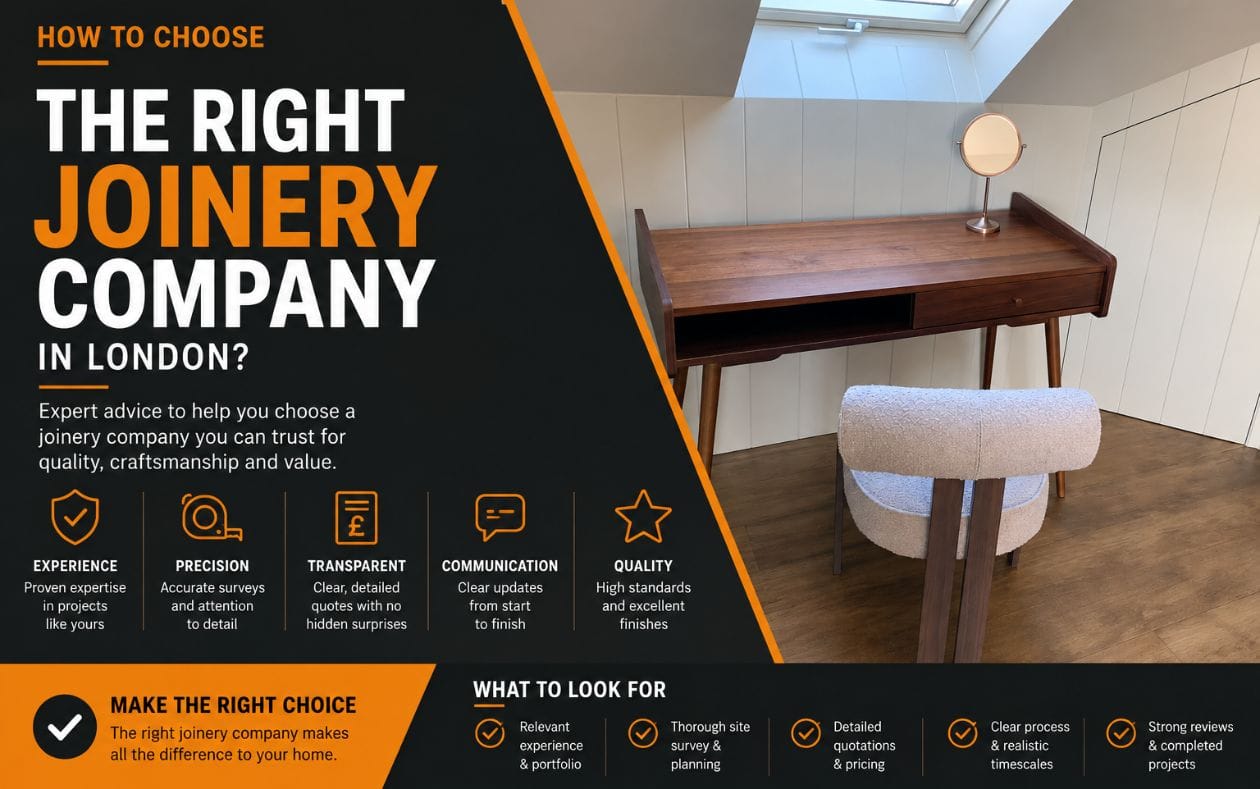
Choosing the right joinery company can be difficult when several companies offer similar services and every quotation looks different. The wrong choice can lead to poor workmanship, unclear costs, delays, or joinery that simply doesn’t work well in your home.
That’s why price alone shouldn’t drive your decision. You need to look at the company’s relevant experience, previous projects, approach to site surveys, material recommendations, quotation details, and installation standards. These checks help you understand who can actually deliver the quality your project needs.
At North London Joinery, we believe a good joinery company should take time to understand your home before recommending a solution. The way you use the space, the existing layout and the finish you want can all shape the right approach. A company that considers these details from the start is better placed to plan work that fits your home and meets your expectations.
Key Takeaways
- Choose a joinery company with relevant experience and completed projects that are similar to the work you’re planning.
- Make sure the company assesses your property carefully, including the layout, measurements, access and existing features.
- Compare the complete quotation, including materials, finishes, installation and exclusions, rather than looking at the final price alone.
- Choose a company that communicates clearly about the design, timescales, responsibilities and any changes during the project.
- Check previous work carefully to assess the quality of the fit, finish, detailing and overall workmanship.
- Be cautious of vague quotations, rushed recommendations or pressure to commit before you fully understand the proposed work.
What Should You Look for in a Joinery Company?
A good joinery company should show relevant experience, consistent workmanship and a clear approach to planning your project. Look beyond finished photographs and price. Pay attention to how the company assesses your home, explains its recommendations and prepares for the work.
1. Relevant Experience for Your Project
Not every joinery project requires the same skills. Fitted wardrobes, alcove units, kitchen cabinetry and timber repairs each bring different challenges. Check whether the company has completed projects similar to yours and look closely at the quality of its finished work. A portfolio of recent joinery projects can help you judge its craftsmanship, attention to detail and experience with the type of work you need.
If you’re still deciding what type of made-to-measure work suits your home, our bespoke joinery guide explains what bespoke joinery involves and where it can be used.
2. How They Assess Your Home
In London properties, we often find that walls, floors and alcoves aren’t perfectly square. That matters when you’re planning fitted wardrobes, alcove units or other made-to-measure joinery because even relatively small variations can affect how neatly the finished piece fits.
A good example is our Forestdale project in Southgate, where we completed bespoke joinery across several areas of the property. The work included under-stairs storage and a fitted study with a desk and concealed storage behind angled panelling in the loft. Projects like this show why assessing the available space and how it will be used is an important part of planning made-to-measure joinery.
3. How Clearly They Explain the Work
A joinery company should make it clear what it plans to build and what you’re paying for. It should explain the proposed materials, finish, installation and scope of work in terms you can understand. The quotation should also identify any significant exclusions, helping you compare options properly and avoid unexpected misunderstandings once the work begins.
4. Communication From Planning to Installation
Clear communication keeps a joinery project organised from the first discussion through to installation. The company should explain design decisions, confirm materials and finishes, set realistic timescales and keep you informed if anything changes. You should also know what to expect at each stage, especially if other trades or preparation work are involved. Good communication helps everyone work from the same plan and reduces the risk of delays, confusion or unexpected changes.
Ways to Choose the Right Joinery Company
Once you know what to look for, you can start narrowing down your options. A simple selection process helps you compare suitable companies without getting distracted by price, availability or first impressions alone.
1. Define What You Want From the Project
Start with the result you want to achieve. Think about how you use the room, what you want to improve and which features matter most. You don’t need to decide every design detail. Clear priorities will also help you understand which of our joinery and home improvement services best suits the type and scale of your project.
2. Build a Relevant Shortlist
Create a shortlist of companies that handle the kind of work you’re planning. If you need fitted furniture, for example, focus on companies that regularly work on made-to-measure interiors rather than businesses whose main experience lies elsewhere. A focused shortlist makes the next stage much easier.
3. Contact More Than One Company
Speak to a few suitable companies before making your choice. Give each one similar information about the project so you can judge their responses on a fair basis. This also gives you a chance to understand the different approaches available before committing to one.
4. Arrange a Site Visit Where Necessary
For bespoke or made-to-measure work, invite shortlisted companies to see the space where appropriate. A site visit gives you the chance to discuss your priorities in the actual room and raise practical concerns that may be difficult to explain through photographs or measurements alone.
5. Review Everything Before You Decide
Bring together everything you’ve learned before making the final choice. Consider whether the proposed approach suits your priorities and whether you understand what will happen next. Don’t feel pressured to decide immediately. Take enough time to make a choice you feel comfortable with.
How Should You Compare Joinery Quotes?
When comparing joinery quotes, check exactly what each company has included before looking at the final price. Two quotes may appear to cover the same project but use different materials, finishes, specifications or levels of installation. Comparing them properly helps you understand where your money is going and which proposal offers better value for your project.
1. Check the Scope of Work
Start by checking what each quote actually covers. Look for details about design, manufacture, preparation, delivery and installation. If part of the work isn’t clearly listed, ask whether the company has included it. A detailed scope makes it easier to spot differences between proposals before you make a decision.
2. Compare the Material Specification
Check whether each company has priced the same type and quality of materials. Different timber, sheet materials, hardware and finishes can affect the cost and the finished result. Rather than assuming a higher or lower price reflects workmanship alone, find out what specification each company has based its quote on.
3. Look at What the Installation Includes
Installation can involve more than fitting the finished joinery into position. Your project may require preparation, adjustments on site or coordination with other work in the room. Ask what the company will handle and what you need to arrange separately. This gives you a clearer picture of the true project cost.
4. Check What Isn’t Included
Exclusions deserve as much attention as inclusions. Decorating, electrical work, removal of existing furniture or other preparation may sit outside the quoted scope. Identifying these items early helps you budget for the complete project rather than discovering additional costs after work has started.
5. Don’t Let the Lowest Price Make the Decision
The cheapest quote isn’t automatically poor value, and the most expensive isn’t automatically the best. Compare what each company proposes to deliver and whether that specification suits your needs. A quote becomes useful only when you understand the work, materials and level of service behind the final figure.
Things to Watch for Before Hiring a Joinery Company
Some warning signs can appear before work starts. Spotting them early gives you time to ask questions and avoid making a rushed decision.
- Vague or incomplete quotations: Be cautious if a quote gives you a total price but doesn’t clearly explain the work, materials, finishes or installation included.
- No relevant examples of previous work: A company should be able to show work that reflects the type and quality of joinery you need. Relevant examples make it easier to assess their workmanship.
- Recommendations made too quickly: Bespoke joinery should respond to your space and requirements. Be cautious if a company recommends a solution without first understanding the property and how you plan to use it.
- Pressure to make a quick decision: You should have enough time to review the proposed work, ask questions and understand the costs before committing to a project.
- Unclear responsibility for the project: Make sure you know who will manage the work, complete the installation and deal with any changes or questions during the project.
What Matters More Than Price When Choosing a Joinery Company?
Price matters, but it shouldn’t decide who you hire on its own. The real value comes from how well the finished joinery suits your home, performs in daily use and meets the standard you expected when you agreed to the work.
- Suitability for your home: The proposed joinery should fit the available space and work with the existing layout rather than simply look good in a design.
- Quality of workmanship: Look closely at the fit, joints, alignment and finishing. Small details often make the biggest difference to the finished result.
- Practical design: Good joinery should make the space easier to use. Storage, access and everyday function should influence the design from the start.
- Long-term value: Consider how the materials, construction and finish will perform over time. Paying less initially may offer little value if the work doesn’t meet your needs or requires early repairs.
The best choice isn’t automatically the cheapest or most expensive company. It’s the one that offers the right balance of quality, suitability and value for your project.
How Do You Make the Final Choice?
Once you’ve compared your options, choose the joinery company that gives you the clearest understanding of how your project will move forward. You should know what they plan to deliver, what the work involves and whether their proposed approach suits your home.
The right choice should also feel considered rather than rushed. If you still have questions about the design, specification or scope, get those answers before agreeing to the work. A good company should give you enough information to make that decision with confidence.
At North London Joinery, our bespoke joinery services start with understanding the space and what you want to achieve.
Contact us if you’re planning a joinery project and want practical advice before making a decision. We can discuss your ideas, assess your space and provide a clear quotation based on what your project actually needs.
Frequently Asked Questions
Choose a good joinery company near you by checking its experience, previous projects, customer reviews and the quality of its quotations. A reliable company should also assess your space properly, explain the materials and installation process clearly, and answer your questions before you agree to the work.
Before hiring a joiner, ask about similar projects, proposed materials, what the quotation includes, who will carry out the work and how the project will progress. You should also clarify expected timescales, installation arrangements and any work that isn’t included in the quotation.
Getting more than one quote can help you compare different approaches, specifications and costs. Compare what each company includes rather than choosing based on the lowest price alone.
A joinery quote should clearly describe the agreed scope of work and relevant materials, finishes and installation. It should also identify significant exclusions or additional work you may need to arrange.
Look at completed projects that match the type of work you need. Pay attention to fit, finish, detailing and how well the joinery works within the available space.
Contact companies early enough to allow time for consultation, design decisions, material selection and scheduling. Lead times vary depending on the project and the company’s workload.


0 Comments